
Enterprise applications expose functionality through APIs. The choice of API style affects performance, developer experience, client flexibility, and long term maintainability. Three styles dominate enterprise software in 2026: REST, GraphQL, and gRPC.
Each is suited to different types of communication. Choosing based on popularity rather than requirements leads to unnecessary complexity or insufficient capability.
REST
REST is the default for web APIs. It maps operations to HTTP methods (GET, POST, PUT, DELETE) and resources to URLs. A request to GET /api/customers/123 retrieves customer 123. A POST to /api/orders creates a new order.
REST’s strength is simplicity. HTTP is universally understood. Caching works natively through HTTP cache headers. Every programming language has HTTP client libraries. Documentation standards like OpenAPI make REST APIs self describing.
REST’s weakness is over fetching and under fetching. A mobile client that needs a customer’s name and email receives the entire customer object, including fields it does not need. A dashboard that needs data from three related resources makes three separate requests. This pattern creates unnecessary network traffic and latency.
REST works best for public APIs consumed by many different clients, CRUD (create, read, update, delete) applications with simple data access patterns, and systems where HTTP caching provides significant performance benefits.
GraphQL
GraphQL lets clients specify exactly which fields they need and retrieve data from multiple related resources in a single request. Instead of GET /api/customers/123 followed by GET /api/customers/123/orders, a GraphQL query retrieves the customer name, email, and their last five orders in one round trip.
GraphQL’s strength is client flexibility. Frontend teams can iterate on their data requirements without backend API changes. Mobile clients fetch less data than desktop clients using the same API. This eliminates the over fetching and under fetching problems of REST.
GraphQL’s weakness is operational complexity. Every query is unique, which makes caching harder than REST’s URL based caching. Query complexity can spiral if clients request deeply nested data structures, creating database performance problems on the server. Rate limiting is harder because a single request can vary from trivial to expensive depending on the query.
GraphQL works best for applications with complex data relationships (social graphs, content management systems), products where multiple client types (web, mobile, IoT) consume the same API with different data needs, and teams where frontend velocity is a priority.
gRPC
gRPC uses Protocol Buffers (a binary serialisation format) and HTTP/2 for communication. It is designed for high performance, low latency communication between services. Data is transmitted in compact binary format rather than JSON text. Service contracts are defined in .proto files that generate client and server code in multiple languages.
gRPC’s strength is performance. Binary serialisation is faster to encode, decode, and transmit than JSON. HTTP/2 multiplexing allows multiple requests on a single connection. Bidirectional streaming lets server and client send data simultaneously. For internal service to service communication in microservices architectures, gRPC reduces latency and bandwidth consumption compared to REST.
gRPC’s weakness is client accessibility. Browsers cannot call gRPC services natively (though gRPC Web provides a workaround). Debugging is harder because binary traffic is not human readable. The learning curve for Protocol Buffers is steeper than JSON.
gRPC works best for internal microservice communication where latency matters, real time streaming applications (chat, live data feeds, telemetry), and polyglot environments where auto generated client libraries save development time.
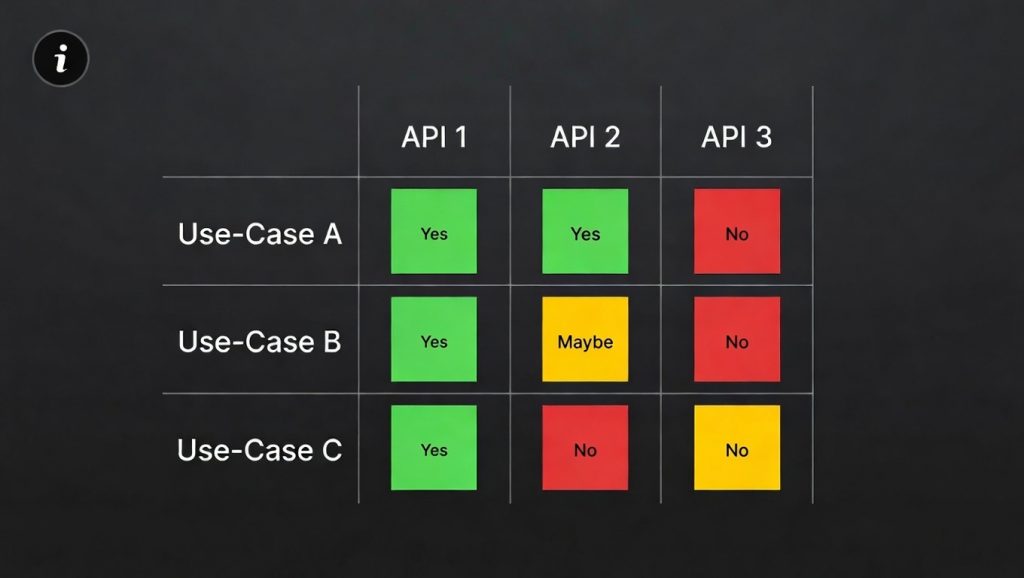
When to Use Each
Use REST for your public API and any API consumed by third party developers. Simplicity and universality win in this context.
Use GraphQL for your frontend API when you have complex data requirements and multiple client types. The investment in GraphQL server infrastructure pays off through faster frontend development.
Use gRPC for internal service to service communication in performance sensitive architectures. The binary protocol and streaming capabilities provide measurable improvements in latency and throughput.
Many enterprise architectures use all three: gRPC between backend services, GraphQL as a frontend aggregation layer, and REST for public and partner APIs.
What This Means for Your Business
API architecture decisions affect performance, developer productivity, and integration flexibility for years. The right choice depends on who consumes the API and what communication patterns your application requires.
FortySeven’s Custom API Development and Web Application Development practices help enterprises design and build API architectures that match their communication requirements.
Contact us at fortyseven47.com/contact-us