
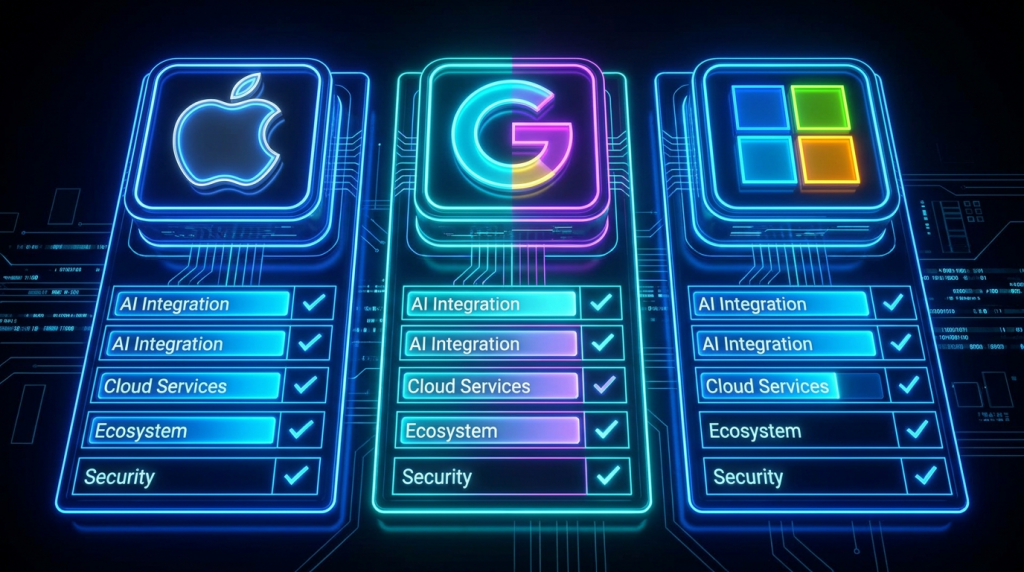
Apple is testing a standalone Siri app for iOS 27, codenamed “Campo.” It will feature conversation history and text input, turning Siri from a voice-triggered assistant into a persistent AI agent. The expected unveil is WWDC on June 8, 2026, with public release alongside iPhone 18 in September.
Google is preparing a broader rollout of Gemini “Skills” into AI Studio, with a new “Agent” tab signalling standardised, persistent agent behaviour. Microsoft has been running Copilot agents across its Office suite for over a year.
Every major platform is converging on the same product pattern: AI agents that persist across sessions, learn from context, and execute multi-step tasks on behalf of users.
What Makes This Wave Different
Earlier AI assistants were stateless. You asked a question, got an answer, and the context was lost. The current generation of platform agents is designed to maintain state, remember preferences, access your data, and take actions across applications.
Apple’s Campo app represents a significant shift. Siri has been a voice-first, single-turn interaction tool for over a decade. A standalone app with conversation history and text input means Apple is positioning Siri to compete directly with ChatGPT and Gemini as a persistent AI interface.
Google’s approach is more developer-focused. Gemini Skills allow developers to create persistent, specialised agent behaviours that can be deployed across Google’s ecosystem. The Agent tab in AI Studio signals that Google wants third-party developers building agents on its platform, creating an ecosystem effect similar to the App Store.
What This Means for Enterprise App Strategy
Enterprise applications will need to expose functionality to platform agents. When employees use Siri, Gemini, or Copilot to manage tasks, those agents will expect to interact with your internal tools.
This creates three immediate requirements.
API surface area. Your enterprise applications need well-documented, agent-accessible APIs. An AI agent cannot interact with a system that only exposes a human-facing web interface.
Data governance. Platform agents that access enterprise data introduce new data residency and compliance considerations. When an employee asks Siri to summarise a confidential document, where does that data travel?
Workflow integration. The value of AI agents increases when they can chain actions across multiple systems. Approving a purchase order, updating a CRM record, and sending a confirmation email as a single agent-driven workflow requires that each system supports the same agent interaction patterns.
The Platform Tax
Apple, Google, and Microsoft will all extract economic value from agent interactions. The pattern is already visible: premium API access tiers, enterprise licensing for agent capabilities, and data processing fees for on-device vs. cloud agent execution.
Enterprises that build agent-compatible applications early will have negotiating leverage. Those that wait will face platform-dictated integration terms.
What This Means for Your Business
The agent transition is moving faster than the mobile transition did. Enterprises that took three years to build mobile-first applications are going to face the same scramble with agent-first interfaces in a compressed timeline.
The practical step now is to audit your enterprise applications for agent readiness. Which systems have APIs? Which handle data that should not leave your infrastructure? Which workflows would benefit from agent-driven automation?
FortySeven’s AI Agents and Automation practice helps enterprises build agent-ready architectures. We design APIs, implement data governance frameworks, and create workflow automation that works with Apple, Google, and Microsoft agent ecosystems.
Contact form: